


SNOWBOARD GUIDE - BEGINNER'S GUIDE TO BUYING & CHOOSING A SNOWBOARD
As we sell a large selection of high quality snowboards and ski equipment for both men and women, we have designed this detailed guide.
We have done this to give you knowledge of what we believe is important for you to find the right snowboard that meets your specific needs.
BEFORE YOUR PURCHASE
Underneath we have listed some of the first thoughts we think you should get ready about before you buy your snowboard.
• Your abilities and level (Are you beginner, experienced, advanced or pro?)
• The width and length of the snowboard (The width and length should be determined based on your height/weight)
• Terrain (What terrain do you want to ride with your snowboard?)
• Ridingstyle (What is your rider style? Off-piste, Park, All-mountain etc?)
Of course, we will go into all the above points in more depth in our guide here, so you can get on and come out snowboarding faster.
Remember that in addition to offering snowboards, we also have a large selection of snowboard equipment, bindings, snowboard boots for both men and women, as well as various winter clothes for ski / snowboard in the form of glasses, jackets, pants, helmets, hats and gloves. Find all this in the links below.
See here all our men and woman snowboard bindings.
See here our wide selection of men and women boots to snowboarding.
See here our full selection of clothing and snowboard equipment.
SNOWBOARD GRABS FOR THE MORE EXPERIENCED
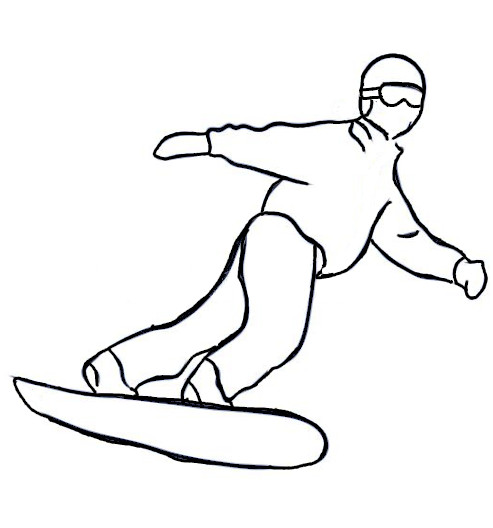
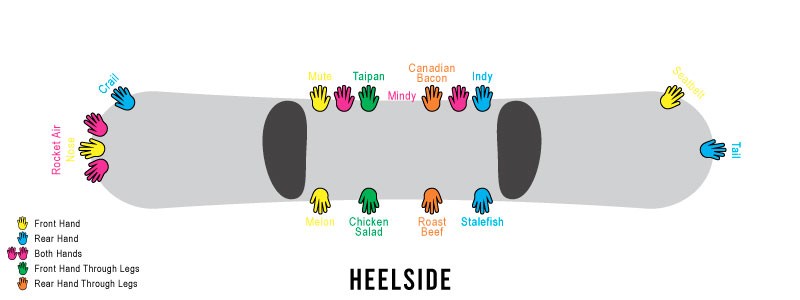
Below is an illustration of some grabs you will be able to practice with as you get better and more experienced as a snowboarder.
However, there are many more than those below.
GOOD WORDS TO KNOW
If there are single words or more you are in doubt in our guide, you can use this smaller list of words below.
Tip: Your snowboards leading
Tail: Your snowboards rear end
Effective edge The effective edge is the part of the edge that comes into contact with the snow when the snowboard is on edge. The snowboard is longer than the effective edge. The longer an effective edge, the more stability. Conversely, a shorter effective edge will mean that you will feel less stable, but also have easier time performing turns.
Core Material: Your snowboards core material is in the middle of the board. Most often this will be of wood or a mixture of several types of wood. Other materials such as foam can also be part of the core material.
Extruded base: Extruded snowboard bases mean they are made of polyethylene. The term refers to the design and heating process used on the base during development. They do not hold wax as effectively as sintered bases that have not been waxed, but you will find them easier to repair.
Sintered base: These snowboard bases are made to glide faster. They consist of the same material polyethylene, but the method of manufacture of boards with this base is different. Wax is absorbed really efficiently, and the more you maintain your snowboard, the faster it will be able to slide. Most often, sintered bases are more expensive, but a downside is that they are tildes harder to repair in case of damage.
QUESTIONS?
Should you have any doubts or have any questions, you are always welcome to contact us here.
As we sell a large selection of high quality snowboards and ski equipment for both men and women, we have designed this detailed guide.
We have done this to give you knowledge of what we believe is important for you to find the right snowboard that meets your specific needs.
BEFORE YOUR PURCHASE
Underneath we have listed some of the first thoughts we think you should get ready about before you buy your snowboard.
• Your abilities and level (Are you beginner, experienced, advanced or pro?)
• The width and length of the snowboard (The width and length should be determined based on your height/weight)
• Terrain (What terrain do you want to ride with your snowboard?)
• Ridingstyle (What is your rider style? Off-piste, Park, All-mountain etc?)
Of course, we will go into all the above points in more depth in our guide here, so you can get on and come out snowboarding faster.
Remember that in addition to offering snowboards, we also have a large selection of snowboard equipment, bindings, snowboard boots for both men and women, as well as various winter clothes for ski / snowboard in the form of glasses, jackets, pants, helmets, hats and gloves. Find all this in the links below.
See here all our men and woman snowboard bindings.
See here our wide selection of men and women boots to snowboarding.
See here our full selection of clothing and snowboard equipment.
SNOWBOARD - CHOICE OF SIZE
When choosing a snowboard, both the length and the width play a role in how efficiently you will be able to ride with it.
We will begin with everything you need to know about choosing the right length for your snowboard.
Length
When choosing the length of your snowboard, depending on other factors such as level, weight and desired terrain. In general, the general rule is to pose with the snowboard and see if the tip reaches your chin. If it does this, then its height suits you. However, your weight, as well as the terrain you want to ride, also play a role in your snowboard's length.
If you are most into Park and Freestyle, a shorter snowboardMake it easier to maneuver and spin with as you drive around the many snowparks. If you'd rather ride Off-piste and Freeride, you'll need a longer snowboard for better stability and higher speed.
The table to the side can be used as a guide to choosing your snowboard's length in conjunction with your height and weight.
(Note that it is only indicative, since the length also depends on personal preferences.)
When choosing a snowboard, both the length and the width play a role in how efficiently you will be able to ride with it.
We will begin with everything you need to know about choosing the right length for your snowboard.
Length
When choosing the length of your snowboard, depending on other factors such as level, weight and desired terrain. In general, the general rule is to pose with the snowboard and see if the tip reaches your chin. If it does this, then its height suits you. However, your weight, as well as the terrain you want to ride, also play a role in your snowboard's length.
If you are most into Park and Freestyle, a shorter snowboardMake it easier to maneuver and spin with as you drive around the many snowparks. If you'd rather ride Off-piste and Freeride, you'll need a longer snowboard for better stability and higher speed.
The table to the side can be used as a guide to choosing your snowboard's length in conjunction with your height and weight.
(Note that it is only indicative, since the length also depends on personal preferences.)
Main points for selecting length:
• Park and Freestyle riders should choose shorter snowboards
• All-mountain, Off-piste and Freeride riders should choose longer snowboards
• If you are a heavier rider, a longer snowboard will be a better choice for you
• If you are a beginner, you should go for a shorter snowboard of this kind.
The width
The width of your snowboard should fit with your shoe size and snowboard boots can go further beyond the edges of your snowboard. However, not too much as your feet will then get to hit the snow.
The reason both your toe and heel have to protrude slightly beyond the edges of your snowboard is because it gives you more control over your board. Be careful not to get too far beyond, as this will cause you to fall off during carving.
To the side we have a guide table showing which snowboard widths you should have in relation to your shoe size.
• Park and Freestyle riders should choose shorter snowboards
• All-mountain, Off-piste and Freeride riders should choose longer snowboards
• If you are a heavier rider, a longer snowboard will be a better choice for you
• If you are a beginner, you should go for a shorter snowboard of this kind.
The width
The width of your snowboard should fit with your shoe size and snowboard boots can go further beyond the edges of your snowboard. However, not too much as your feet will then get to hit the snow.
The reason both your toe and heel have to protrude slightly beyond the edges of your snowboard is because it gives you more control over your board. Be careful not to get too far beyond, as this will cause you to fall off during carving.
To the side we have a guide table showing which snowboard widths you should have in relation to your shoe size.
LEVEL & ABILITIES
We have many different designs and models of snowboards for all levels. Each and every one of these snowboards lives up to whatever a beginner or more advanced rider may have of need.
What determines whether a snowboard most are for a beginner or more for an experienced rider, are elements such as flex and shape, as well as the length and construction. In addition, the materials, design and actual use of the board also have a role for who will make the most of it.
The better you rate your own level, the better an experience you will also get with the snowboard you choose.
We have many different designs and models of snowboards for all levels. Each and every one of these snowboards lives up to whatever a beginner or more advanced rider may have of need.
What determines whether a snowboard most are for a beginner or more for an experienced rider, are elements such as flex and shape, as well as the length and construction. In addition, the materials, design and actual use of the board also have a role for who will make the most of it.
The better you rate your own level, the better an experience you will also get with the snowboard you choose.
RIDER STYLE & TERRAIN SELECTION
First of all, it should be mentioned that all snowboards can be used for all kinds of snow terrain. However, you will find that some snowboards are better suited for certain specific terrain types and styles. A freestyle snowboard, for example, is so much more fun to ride in snowparks than in the off-piste.
First of all, it should be mentioned that all snowboards can be used for all kinds of snow terrain. However, you will find that some snowboards are better suited for certain specific terrain types and styles. A freestyle snowboard, for example, is so much more fun to ride in snowparks than in the off-piste.
All-Mountain:
All-Mountain snowboards are incredibly versatile and made for all kinds of snow terrain. You can use them for both slopes, parks and in between. If you are a beginner or have not decided what you are most into yet, an All-Mountain snowboard will be a really good choice.
Freeride:
If you are into lasting terrain, as with Off-piste, a freeride snowboard will be a well chosen one. Freeride snowboards often have a stiffer flex and of the shape directional, as this is best for riding longer distances in the forward direction.
Powder: Powder snowboards are for deep powder. These boards have a wide nose a narrow tapered tail. Due to the location of the bindings, you need to spend significantly less effort to keep the snowboard nose over the snow. Powder snowboards are typically found with a rocker, which does the reverse of what a camber does, namely to provide recovery control and buoyancy.
Freestyle:
Snowboards for freestyle are for Park rides and are typically shorter and are best for snowboarding, involving rails, swiths, wall rides and much more. Virtually all freestyle snowboards are with True Twin form, which means that both ends are the same.
Splitboard:
Splitboards are a relatively new style of snowboarding. They are designed for steep terrain and it can be disassembled so you can walk up the mountains (called randonné). At the top you can then reassemble them and ride down the mountain in the same way as other snowboards.
It is important to have control of the terrain, snow conditions and weather. In addition, also have all necessary equipment for avalanches.
Further, remember your climbing skin, as your trip up the mountain itself will take even longer than needed.
All-Mountain snowboards are incredibly versatile and made for all kinds of snow terrain. You can use them for both slopes, parks and in between. If you are a beginner or have not decided what you are most into yet, an All-Mountain snowboard will be a really good choice.
Freeride:
If you are into lasting terrain, as with Off-piste, a freeride snowboard will be a well chosen one. Freeride snowboards often have a stiffer flex and of the shape directional, as this is best for riding longer distances in the forward direction.
Powder: Powder snowboards are for deep powder. These boards have a wide nose a narrow tapered tail. Due to the location of the bindings, you need to spend significantly less effort to keep the snowboard nose over the snow. Powder snowboards are typically found with a rocker, which does the reverse of what a camber does, namely to provide recovery control and buoyancy.
Freestyle:
Snowboards for freestyle are for Park rides and are typically shorter and are best for snowboarding, involving rails, swiths, wall rides and much more. Virtually all freestyle snowboards are with True Twin form, which means that both ends are the same.
Splitboard:
Splitboards are a relatively new style of snowboarding. They are designed for steep terrain and it can be disassembled so you can walk up the mountains (called randonné). At the top you can then reassemble them and ride down the mountain in the same way as other snowboards.
It is important to have control of the terrain, snow conditions and weather. In addition, also have all necessary equipment for avalanches.
Further, remember your climbing skin, as your trip up the mountain itself will take even longer than needed.
SHAPE - THE SHAPE OF YOUR SNOWBOARD
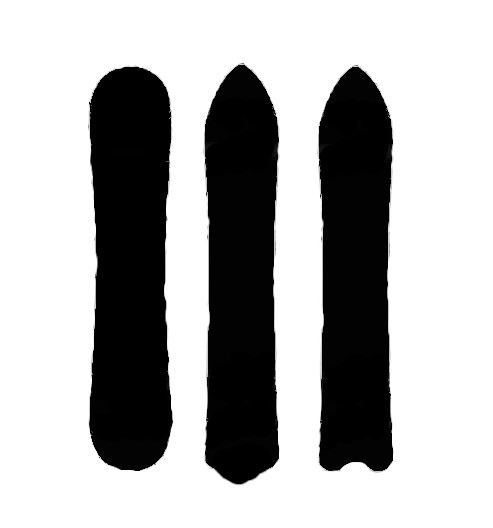
There are mainly three kinds of snowboard shapes. What they have important for your rides is speed, direction and manoeuvring.
There are mainly three kinds of snowboard shapes. What they have important for your rides is speed, direction and manoeuvring.
Directional Snowboards:
When a snowboard is directional it means it is made to run in one direction. However, this does not mean that it would be impossible to drive in the other direction, but much less efficient. These snowboards are typically stiffer in the snowboard's tail and more soft at its nose. This means that the snowboard has a higher stability when carving at fast speeds. The bindings often sit a bit closer near the tail of the snowboard. This form is most often used in All-Mountain and Freeride.
Twin Shape / True Twin Snowboards:
Twin shape snowboards mean that both ends are completely symmetrical in both flex and dimensions. Snowboards with this shape are typically used by Freestyle riders, as it makes driving in the snowparks much more efficient for side breaks and tricks. Bindings on these are placed most often in the middle of the board.
Directional Twin Snowboards:
A mix of both Directional and Twin shape, which gives you a snowboard for a bit of everything. The mix can be designed in different ways that make them better suited for either Freestyle or All-Mountain snow terrain.
When a snowboard is directional it means it is made to run in one direction. However, this does not mean that it would be impossible to drive in the other direction, but much less efficient. These snowboards are typically stiffer in the snowboard's tail and more soft at its nose. This means that the snowboard has a higher stability when carving at fast speeds. The bindings often sit a bit closer near the tail of the snowboard. This form is most often used in All-Mountain and Freeride.
Twin Shape / True Twin Snowboards:
Twin shape snowboards mean that both ends are completely symmetrical in both flex and dimensions. Snowboards with this shape are typically used by Freestyle riders, as it makes driving in the snowparks much more efficient for side breaks and tricks. Bindings on these are placed most often in the middle of the board.
Directional Twin Snowboards:
A mix of both Directional and Twin shape, which gives you a snowboard for a bit of everything. The mix can be designed in different ways that make them better suited for either Freestyle or All-Mountain snow terrain.
SNOWBOARD PROFILS
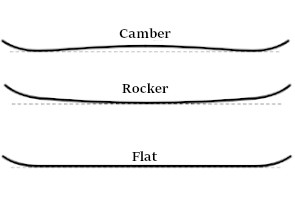
There are a total of 3 major profiles for snowboards. Camber, Rocker and Flat. However, it will be more complicated than that. These 3 profiles can be combined in many different ways, which increase the performance of the snowboard.
Underneath we go through the three profiles and some combinations that are used more than others.
There are a total of 3 major profiles for snowboards. Camber, Rocker and Flat. However, it will be more complicated than that. These 3 profiles can be combined in many different ways, which increase the performance of the snowboard.
Underneath we go through the three profiles and some combinations that are used more than others.
Camber:
Camber is typically used profile for snowboards. Professional Park/Pipe riders often use it, providing a higher energy and a good pop. Camber snowboards have an upward bend below where you stand with your feet. When the emphasis is placed on the snowboard, a distributed pressure is placed over the snowboard and its edges. This provides a robust and stable grip at the edges.
Rocker:
Rocker snowboards are built in exactly the reverse shape of Camber snowboards. Instead of bending upwards, rocker boards bend downwards at the area your feet stand. This contributes less contact with the edges when weighing on the snowboard. These snowboards are easier to turn and can float better in powders.
Flat:
As it sounds of the name, a snowboard with a Flat profile completely flat from the Tip to the Tail. This shape is the middle ground between Camber snowboards and Rocker snowboards, which means greater precision in terms of edge grip, and also more forgiving during turns.
Camber is typically used profile for snowboards. Professional Park/Pipe riders often use it, providing a higher energy and a good pop. Camber snowboards have an upward bend below where you stand with your feet. When the emphasis is placed on the snowboard, a distributed pressure is placed over the snowboard and its edges. This provides a robust and stable grip at the edges.
Rocker:
Rocker snowboards are built in exactly the reverse shape of Camber snowboards. Instead of bending upwards, rocker boards bend downwards at the area your feet stand. This contributes less contact with the edges when weighing on the snowboard. These snowboards are easier to turn and can float better in powders.
Flat:
As it sounds of the name, a snowboard with a Flat profile completely flat from the Tip to the Tail. This shape is the middle ground between Camber snowboards and Rocker snowboards, which means greater precision in terms of edge grip, and also more forgiving during turns.
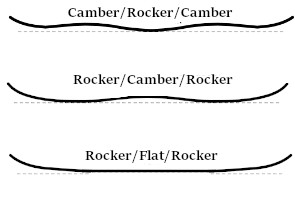
The additional combinations below are just extra effective compositions of the main profile types illustrated above. What makes them smart is that they put together a little of the good elements from each of their senior profiles' main group. This then results in some quite smart snowboards, which to a large extent more specifically adapt to a current variant of the snowboard sport.
Rocker/Camber/Rocker:
This combination of profiles gives you good edge grip to carve on the slopes. In addition, you also get easier when swinging and buoyancy in powders. Very popular profile for Freeride snowboards, which are also basically meant to ride Off-piste.
Rocker/Flat/Rocker:
This second combination of profiles contributes to high edge grip on hardpack and pop. In addition, however, you still maintain an easy introduction to turns and buoyancy. The performance of a snowboard with this as a profile is a middle ground of a full Rocker snowboard and an entire Flat snowboard.
Camber/Rocker/Camber:
This is a profile that is well suited to snowboards. It works so that the weight of the rider flattens the Camber sites on the board out. With this profile you get a strong carving area between your feet. In addition to carving, you also get a robust and precise pop.
This combination of profiles gives you good edge grip to carve on the slopes. In addition, you also get easier when swinging and buoyancy in powders. Very popular profile for Freeride snowboards, which are also basically meant to ride Off-piste.
Rocker/Flat/Rocker:
This second combination of profiles contributes to high edge grip on hardpack and pop. In addition, however, you still maintain an easy introduction to turns and buoyancy. The performance of a snowboard with this as a profile is a middle ground of a full Rocker snowboard and an entire Flat snowboard.
Camber/Rocker/Camber:
This is a profile that is well suited to snowboards. It works so that the weight of the rider flattens the Camber sites on the board out. With this profile you get a strong carving area between your feet. In addition to carving, you also get a robust and precise pop.
HOW TO CHOOSE THE BEST?
In terms of profiles, you can't say what's the best. It depends on your own needs, preferences and what snowboarding style you want to exercise. In short, however, camber provides a good stable edge grip during high rushes on the hard pack. Whereas the Rocker profile provides better buoyancy in powders, while the chance of you catching an edge in the snowpark is much less.
Snowboards with Rocker profiles can be smart for beginners as you'll find it easier to maneuver. For intermediate riders who want a softer snowboard of kind, will a Rocker snowboard also be quite good.
In terms of profiles, you can't say what's the best. It depends on your own needs, preferences and what snowboarding style you want to exercise. In short, however, camber provides a good stable edge grip during high rushes on the hard pack. Whereas the Rocker profile provides better buoyancy in powders, while the chance of you catching an edge in the snowpark is much less.
Snowboards with Rocker profiles can be smart for beginners as you'll find it easier to maneuver. For intermediate riders who want a softer snowboard of kind, will a Rocker snowboard also be quite good.
FLEX - STIFFNESS & SOFTNESS
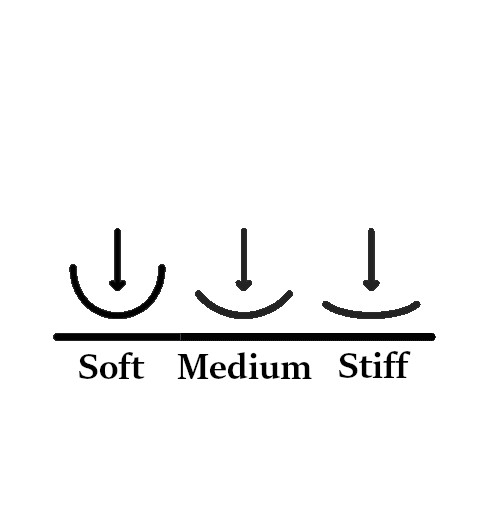
Inside snowboarding industry varies incredibly much from brand to brand and from snowboard to snowboard. There is no fixed value for what a medium flex snowboard means, for example. However, some brands use a scale of 1-10, where the softest flex is 1 and the stiffest is10.
Here below it says a little about what is good about a softer and stiffer flex.
Softer Flex:
It is typical All-Mountain or Freestyle snowboards which is of a softer flex. They are easier to maneuver and more forgiving, making them a good choice for people of low body weight, as well as beginners and riders who love Freestyle. They may be less stable at high rates, but are again easier for play.
Stiffer Flex:
Far more often, snowboards of stiffer flex will be used for riders who love Freeride and Off-piste. A stiffer flex increases the edge grip and provides better stability in the field of high hazards. Snowboards that are rigid are great for bigger turns at high speeds. They may be harder to control during low hazards, and do not flex sufficiently if you are too light in weight.
Inside snowboarding industry varies incredibly much from brand to brand and from snowboard to snowboard. There is no fixed value for what a medium flex snowboard means, for example. However, some brands use a scale of 1-10, where the softest flex is 1 and the stiffest is10.
Here below it says a little about what is good about a softer and stiffer flex.
Softer Flex:
It is typical All-Mountain or Freestyle snowboards which is of a softer flex. They are easier to maneuver and more forgiving, making them a good choice for people of low body weight, as well as beginners and riders who love Freestyle. They may be less stable at high rates, but are again easier for play.
Stiffer Flex:
Far more often, snowboards of stiffer flex will be used for riders who love Freeride and Off-piste. A stiffer flex increases the edge grip and provides better stability in the field of high hazards. Snowboards that are rigid are great for bigger turns at high speeds. They may be harder to control during low hazards, and do not flex sufficiently if you are too light in weight.
TURNING ABILITIES - TURNING RADIUS
All snowboards are designed to have different turningradius. The way to determine these is by using the radius, rocker and waist width.
Radius:
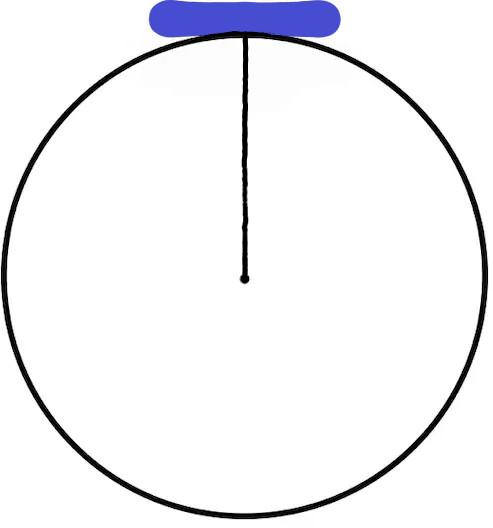
The size of the circle the snowboard would make if the edge curve was extended to a finished circle, is what is termed as a snowboard radius. Based on how high or low a radius a snowboard has, you can find out how good it is to turn and swing.
In short, all snowboard with low radius turning easier than a high radius snowboard.
Rocker:
A Rocker at both ends of your snowboard means it turns easier.
Waist width:
Waist width is most often measured in millimetres and is found from the width of the the snowboard’s narrowest point. The narrower the waist width of your snowboard, the faster you will get from edge to edge. The important thing about the waist width is that it should match as much as possible your snowboard boot size.
All snowboards are designed to have different turningradius. The way to determine these is by using the radius, rocker and waist width.
Radius:
The size of the circle the snowboard would make if the edge curve was extended to a finished circle, is what is termed as a snowboard radius. Based on how high or low a radius a snowboard has, you can find out how good it is to turn and swing.
In short, all snowboard with low radius turning easier than a high radius snowboard.
Rocker:
A Rocker at both ends of your snowboard means it turns easier.
Waist width:
Waist width is most often measured in millimetres and is found from the width of the the snowboard’s narrowest point. The narrower the waist width of your snowboard, the faster you will get from edge to edge. The important thing about the waist width is that it should match as much as possible your snowboard boot size.
PRICE, QUALITY DURABILITY
On our site you will find a large selection of quality snowboards at reasonable prices. Prices can vary a lot depending on the production methods, the wood materials used to design the snowboard, and the design itself are all factors that help to determine quality and price level.
Do you expect to have to use your snowboard over a longer period of time or perhaps several years and seasons, it may be a good idea to spend a little extra money on a snowboard of a higher durability and quality.
On our site you will find a large selection of quality snowboards at reasonable prices. Prices can vary a lot depending on the production methods, the wood materials used to design the snowboard, and the design itself are all factors that help to determine quality and price level.
Do you expect to have to use your snowboard over a longer period of time or perhaps several years and seasons, it may be a good idea to spend a little extra money on a snowboard of a higher durability and quality.
SNOWBOARD GRABS FOR THE MORE EXPERIENCED
Below is an illustration of some grabs you will be able to practice with as you get better and more experienced as a snowboarder.
However, there are many more than those below.
GOOD WORDS TO KNOW
If there are single words or more you are in doubt in our guide, you can use this smaller list of words below.
Tip: Your snowboards leading
Tail: Your snowboards rear end
Effective edge The effective edge is the part of the edge that comes into contact with the snow when the snowboard is on edge. The snowboard is longer than the effective edge. The longer an effective edge, the more stability. Conversely, a shorter effective edge will mean that you will feel less stable, but also have easier time performing turns.
Core Material: Your snowboards core material is in the middle of the board. Most often this will be of wood or a mixture of several types of wood. Other materials such as foam can also be part of the core material.
Extruded base: Extruded snowboard bases mean they are made of polyethylene. The term refers to the design and heating process used on the base during development. They do not hold wax as effectively as sintered bases that have not been waxed, but you will find them easier to repair.
Sintered base: These snowboard bases are made to glide faster. They consist of the same material polyethylene, but the method of manufacture of boards with this base is different. Wax is absorbed really efficiently, and the more you maintain your snowboard, the faster it will be able to slide. Most often, sintered bases are more expensive, but a downside is that they are tildes harder to repair in case of damage.
QUESTIONS?
Should you have any doubts or have any questions, you are always welcome to contact us here.