




Helmets




Helmets - Protection - Skateboard safety and comfort for all levels
A skate helmet is the most important part of your protection, whether you’re riding at the skatepark, hitting street spots, or using your board for transportation. The helmet should protect you in case of falls, fit comfortably for hours, and reflect your personal style. Here you’ll find helmets for kids, teens, and adults skating everything from short rides to intensive practice sessions. When you’re ready to pick a specific model, browse the full range of helmets.
The key is finding the right balance of safety level, fit, weight, and ventilation so you get a helmet you’ll actually want to wear every time you roll out.
Types of skate helmets and how they differ from bike helmets
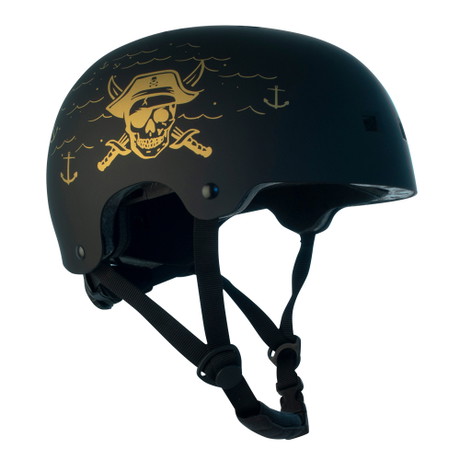
The classic skateboard helmet has a rounded shape with a low profile that extends farther down the back of the neck and covers the sides of the head. It’s built to handle repeated impacts on hard surfaces in the skatepark and on streets, where falls often hit the back and sides of the head.
Some models are made as multi-impact helmets with foam that can handle several smaller hits without losing shape. Others are designed to absorb one major impact and should be replaced after a serious crash. Bike helmets are generally lighter, feature larger ventilation holes, and primarily protect from forward falls, while skate helmets provide more even coverage all around.
Skateboard helmets can be tested according to standards for roller and skate sports and, in some cases, may also be certified for cycling. Check the description for details about the foam, outer shell, and certification if you’re looking for a helmet suitable for multiple activities like inline skating, scooters, and BMX.
How to choose the right helmet size, fit, and safety
Measure your head circumference with a tape measure around your head about half an inch above your eyebrows. Compare the measurement in centimeters with the size guide to find a helmet that’s neither too tight nor too loose. The helmet should sit level, cover your forehead and the back of your head, and stay put when you shake your head.
Adjust the straps so they form a V-shape under your ears, and tighten the buckle under your chin so there’s room for just one or two fingers between the strap and your skin. The inner pads can often be moved or replaced to fine-tune the fit. A proper fit is essential for the helmet to provide full protection if you fall.
When comparing models, use these points as a checklist:
- Fit: Stays secure without pressure points and sits low without sliding backward or forward.
- Ventilation: Number and placement of vents relative to how warm you get while skating.
- Inner foam: The foam type and whether it’s built for one big impact or multiple smaller ones.
- Outer shell: Hard plastic shell for durability or a lighter construction if weight matters most.
- Certification: Whether the helmet is certified for skate use and possibly also for cycling and other roller sports.
- Use case: Whether the helmet will mainly be used for commuting, park, bowl, street, or a combination.
Helmets for different skate styles – park, street, and commuting
For daily commutes through the city, many skaters choose a lightweight helmet with great ventilation and comfort so it feels good to wear over time and at lower to moderate speeds. Here, weight and comfort usually matter more than maximum coverage, as long as safety remains solid.
For park and bowl skating, where you ride transitions, fast lines, and airs, a helmet with a durable outer shell and strong back coverage gives you extra confidence. Resistance to repeated impacts against coping, concrete, and the board itself is key, and a slightly higher weight is often worth it for added protection.
For technical street skating with drops, rails, and gaps, many riders go for a model that combines low weight, great neck mobility, and a shell that handles hits from curbs and metal. Beginners should focus on stability and coverage, while experienced riders often look more for a refined fit, low weight, and compatibility with headphones or beanies.
Maintenance of your helmet – when to replace it and next steps
Your helmet will last longest when stored in a dry place, away from direct sunlight and high heat, and cleaned only with mild soap and water. Avoid strong chemicals that could weaken the foam or shell. Regularly inspect the straps, buckle, and pads for wear, and replace pads if they lose shape or become too compressed.
If your helmet has taken a hard hit, it should usually be replaced even if no cracks are visible. The foam might be damaged inside and will provide less protection in the next fall. For your next step, consider whether your helmet should match your knee, elbow, and wrist protection, and choose a model that delivers the coverage, comfort, and flexibility that best fit your skating style.