




Skate Helmets


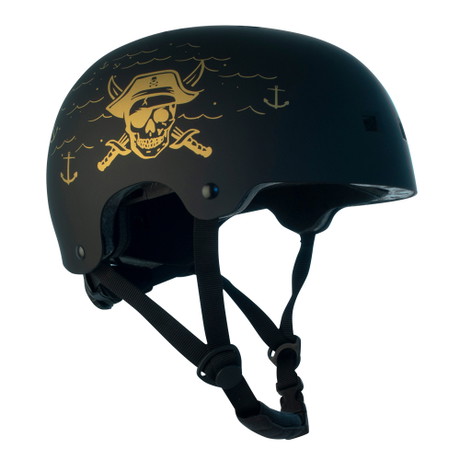


Skate - Helmet - Protection for Roller Skates, Skateboards, and Scooters
Skate helmets are built to protect your head from repeated impacts, hard falls on pavement, and contact with rails, ramps, and edges. They’re commonly used for roller skating, skateboarding, scootering, and other urban sports where falls can happen backward or sideways. This category covers helmets for kids, teens, and adults alike—whether you’re riding in the park, cruising the streets, or commuting every day.
A skate helmet is designed differently than a typical leisure helmet. The shape extends further down the back and sides of the head, and the protection is tuned to withstand the types of impacts that occur during tricks, jumps, and riding on hard surfaces.
Types of Skate Helmets, Materials, and Safety
The classic skate helmet features a round, low-profile design with small ventilation holes and a deep fit that wraps both sides and the back of the head. More cycling-style models often come with extra ventilation channels and a slightly more aerodynamic shape—ideal for longer rides and higher speeds. There are also full-face designs that protect the jaw, made for intensive park or downhill use.
Inside, the helmet is usually constructed with EPS foam that absorbs energy upon impact. The outer shell can be made from tough ABS plastic for high impact resistance and durability, or from a lighter in-mold design where the foam and shell are fused together to reduce weight and increase comfort. Most skate helmets are certified according to common safety standards such as EN 1078 for cycling and roller sports. Some models also include advanced safety features like low-friction inner layers that help reduce rotational forces during angled impacts.
How to Choose the Right Skate Helmet
The most important thing is that the helmet fits securely without pinching and is certified for the sport you ride. Measure your head with a tape measure about 1 cm above your eyebrows and compare the result with the size guide. For children, choose a model that can be adjusted with internal padding or a fit system instead of one that’s too large.
- Size: Measure the head circumference in centimeters and choose a size according to the brand’s chart so the helmet fits snug, not loose or tight.
- Fit: The helmet should sit level and close to your forehead without tilting forward or backward when the strap is fastened.
- Ventilation: Choose more and larger vents for summer and longer rides, and fewer for park or street sessions where impact protection is the top priority.
- Weight: A lighter helmet is more comfortable for extended use—especially for kids and commuters—but it still needs to provide solid protection.
- Certification: Make sure the helmet is approved for both cycling and roller sports—for example, EN 1078—so you’re covered in both traffic and at the skatepark.
- Adjustment: Internal pads, an adjustable dial, and straps around the ears help fine-tune the fit easily for both growing kids and adults.
When adjusting, tighten the chin strap so there’s room for only one or two fingers between the strap and your skin. For kids, regularly check the fit since their heads grow and pads or straps might need readjusting over time.
Skate Helmets for Different Skill Levels and Uses
For beginners, a sturdy classic skate helmet with ample coverage and simple adjustment is a solid starting point. It holds up to daily use, minor bumps, and being carried in a backpack. More experienced riders who spend a lot of time in the park or on the streets should look for models with strong impact resistance, a snug fit, and inner padding that stays secure during repeated hits.
For urban commuting, comfort, airflow, and low weight are key—especially if you wear your helmet for several hours each week. In that case, cycling-style skate helmets are a great choice since they combine excellent ventilation with deeper rear coverage. If you’re using the same helmet for skating and cycling, pick a model certified for both.
Durability depends on use and care. Always replace a helmet after a heavy impact, if cracks appear in the shell or foam, or if the interior feels loose. For kids’ helmets, a couple of years of frequent use may be enough for the foam, straps, and buckles to wear out and need replacing to maintain reliable protection.